The defence where it stands at the decision
Every choice a ball handler makes in the simulation is priced: a shot, a pass to each teammate, a drive, or holding the ball a moment longer. Each price depends on the defence. Until now the price and the replay each had their own idea of where the defence was. The price imagined every defender closing straight at the shooter from where they stood when the last pass was thrown. The replay drew the runs the defenders actually make: toward their own man, the ball and the hoop, each weighted by that defender's scheme, and around the bodies in the way. The two could disagree by a metre and a half. A contest could be priced against a defender the replay had somewhere else.
One set of runs for the price and the picture
Now the defence's runs are built once, at the moment of the decision, and the same runs are handed to both. The price reads each defender where their run has them when the shot leaves the hands. The replay draws those very runs. The same goes for a strip: a hand can take the dribble only while its run actually has it in reach. And for a drive: a defender still running is still closing out, and one who has arrived is set.
A check holds the two together. Over whole games it compares every shot's closest defender in the price against the replay's closest defender at the release, and they agree to a billionth of a metre. A pass is harder, because its receiver's decision is priced before the pass exists. There, the price builds the runs the receiver's defence would make after the catch, with the same targets and the same routing. When the passer reads the defence correctly, these are exactly the runs the replay then draws.
A beaten defender no longer runs through the driver
Once the price and the picture agreed, one flaw stood out. When a drive gets past its defender, that defender is still standing about 0.9 m ahead on the drive's line, still reacting. The driver's run went straight through them. The replay was checked every hundredth of a second through each drive's first 1.5 seconds. In 514 of 1,092 beaten drives (47%), the two bodies' centres came within 0.24 m of each other about 0.6 seconds in. That is closer than two bodies can be (0.286 m).
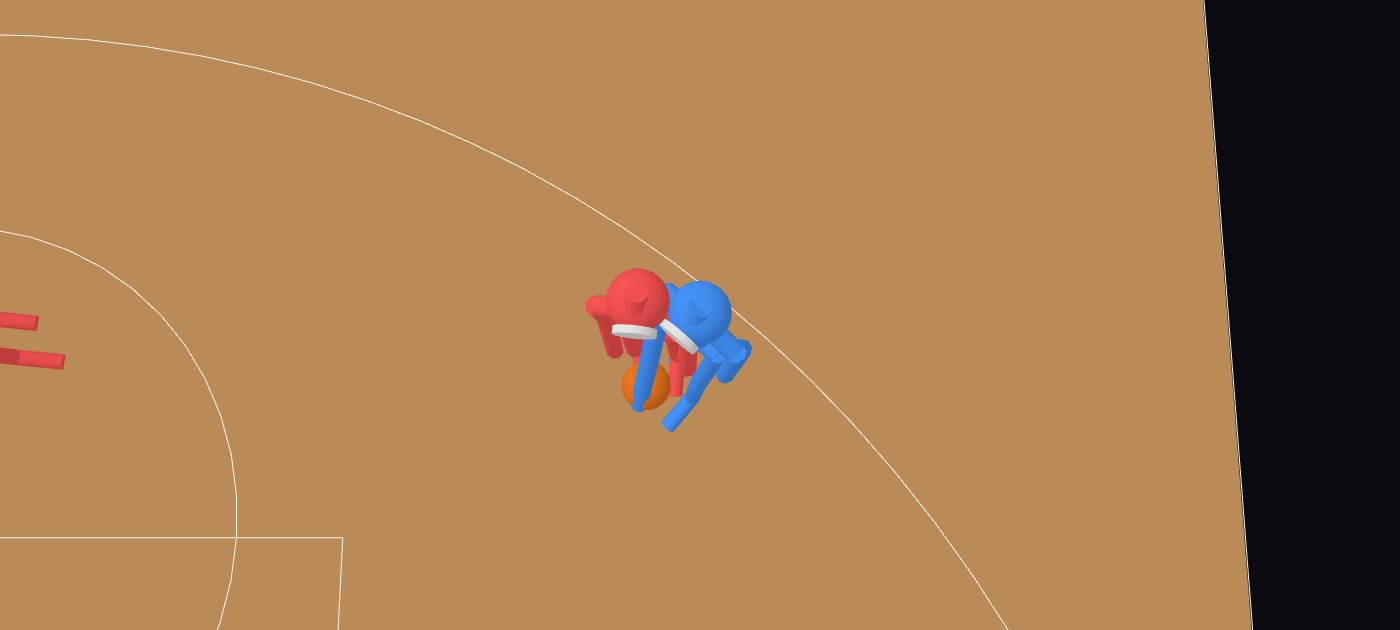
Now the driver goes around the defender they beat, at the moment the two would meet. That moment is timed against the same run the replay records for the defender. A driver also goes around anyone else standing in the lane as the drive starts. In 20 fresh games, none of 1,087 beaten drives passes through the beaten defender.
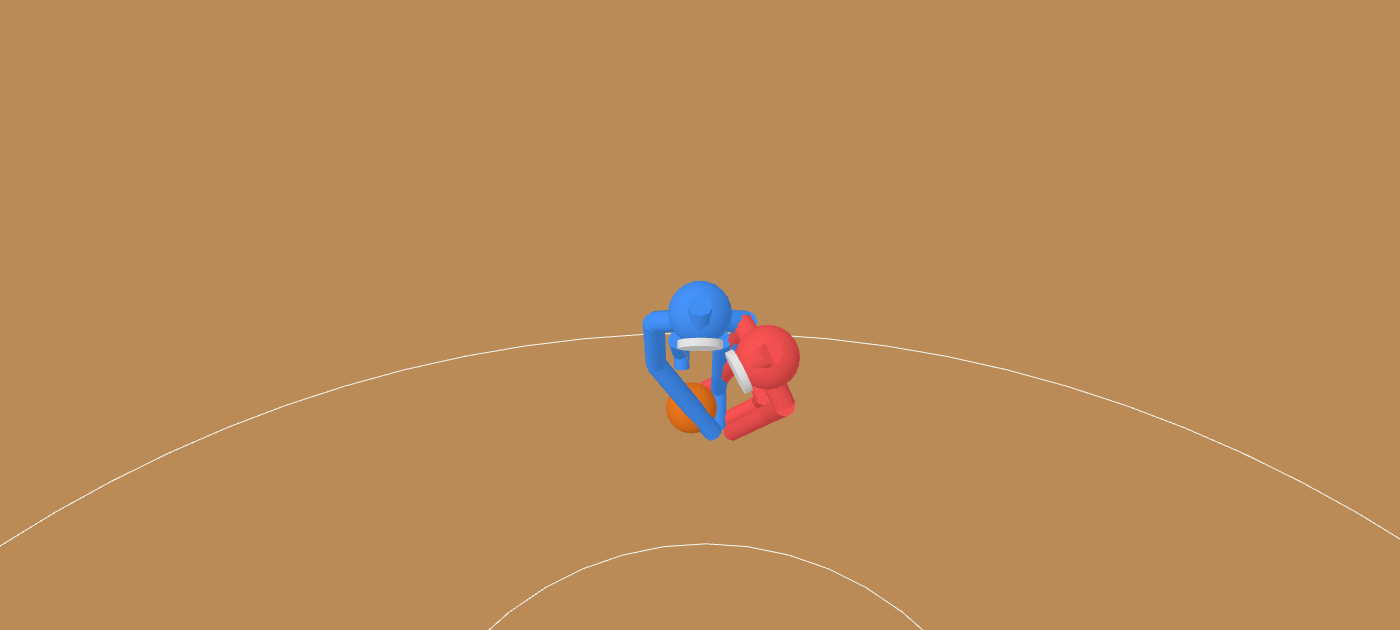
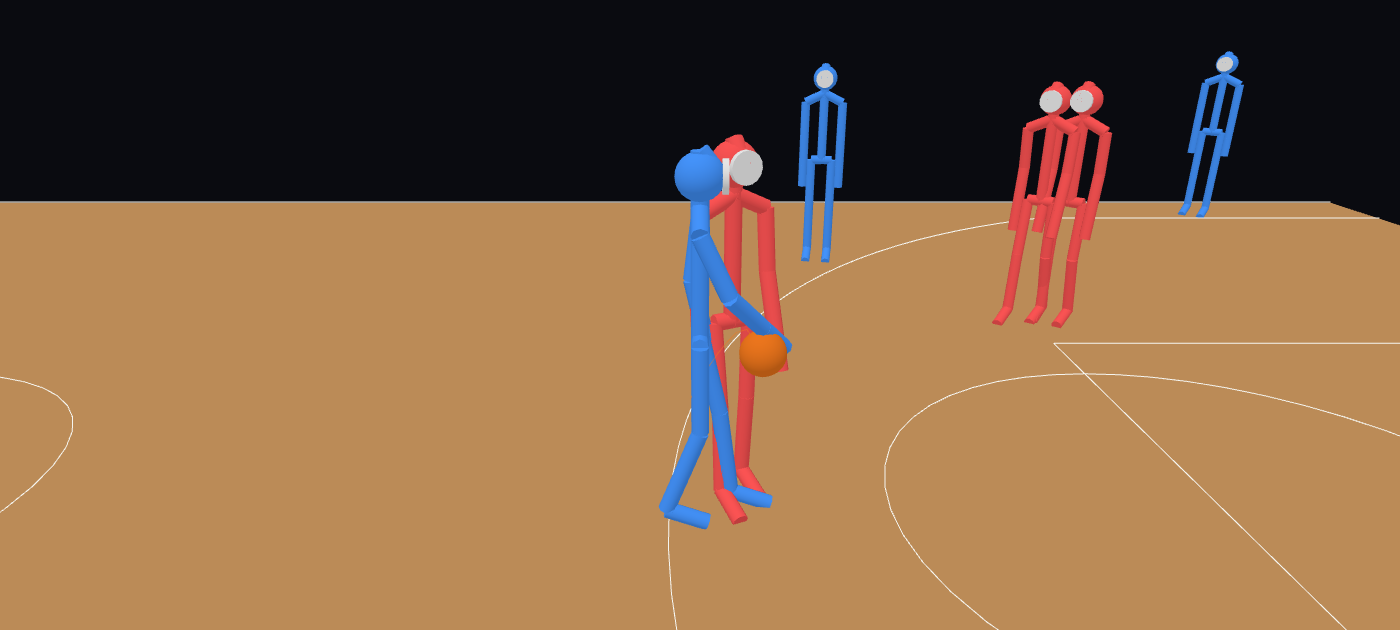
From beside the play, the two figures look like one behind the other. How far apart they are along the line of sight shows only from above, or in the numbers.
Skipping the receivers who cannot win
Pricing a pass on real runs costs more. The price routes about five runs for each of about four receivers at each decision. So before building a receiver's runs, the price asks whether that receiver could possibly beat the best pass found so far. The best any receiver can be worth is their shot with nobody near them, or their hold, whichever is better, times the chance the pass arrives. A contest only lowers the shot, and a price weighted between the two choices is never more than the better one. A receiver who fails that bound could at best tie, and a tie never replaces the best, so skipping them changes no decision:
def _unguarded_worth(shooter, at, *, shot_clock_s, league, rules, gathered_s):
    _, logit, shot_points, release_s = _shot_kind(shooter, at, league=league, rules=rules, pull_up=False)
    shot = shot_points * logistic(logit) if shot_clock_s >= max(0.0, release_s - gathered_s) else 0.0
    return max(shot, hold_value(shot_clock_s - shooter.latency_s, league.hold_curve))

# a receiver is priced only if they could beat the best pass so far
if best is not None and p_complete * _unguarded_worth(mate, spot, ...) <= best[0]:
    continue
Measured first on 300 possessions: 53% of receivers could be skipped. With the bound, a possession ran 18.7% fewer instructions (1,009,080 to 820,692), and every recorded game still played out exactly as before.