Steals now count in the basketball box score, and the replay names each play as it ends
The box score now has a steals column. Every time a defender picks off a pass or strips the ball from a dribbler, that defender is credited with a steal, and the season page has a new leaderboard for steals per game. Until now the box score counted the turnover against the player who lost the ball, but the defender who made the play had no name on the page.
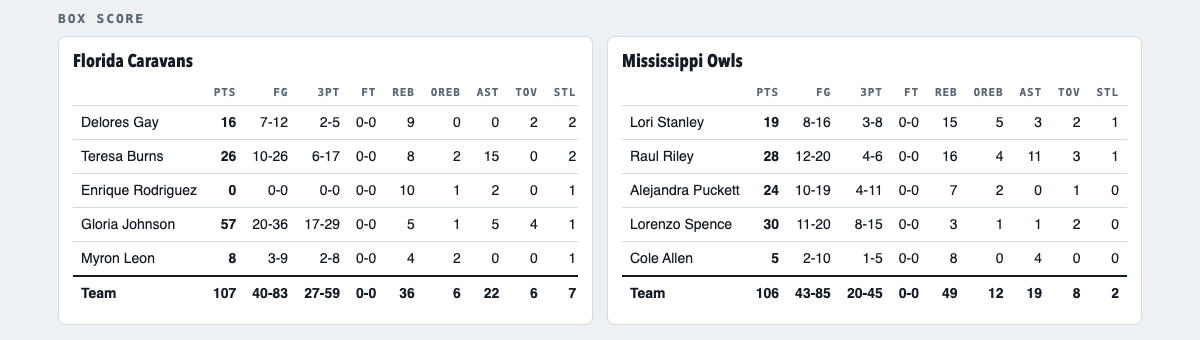
Credited by the game itself
A steal is not worked out after the fact from who had the ball next. When the simulation plays a pass that is intercepted, or a dribble that is stripped, it records which defender did it, at the moment it happens. The box score reads that name and nothing else, so a steal can only go to the player the game says took the ball.
Not every lost ball is a steal. A dribbler who loses the ball on their own, a fumble, is a turnover with nobody to credit. A charge is a turnover too, but the defender who drew it already has their own column for charges taken, so it is not counted twice.
A leaderboard for the defence
The season page ranks the league's leaders in steals per game, beside scoring, rebounds, assists and shooting. The names on it are the defenders who took the ball most often, game for game.
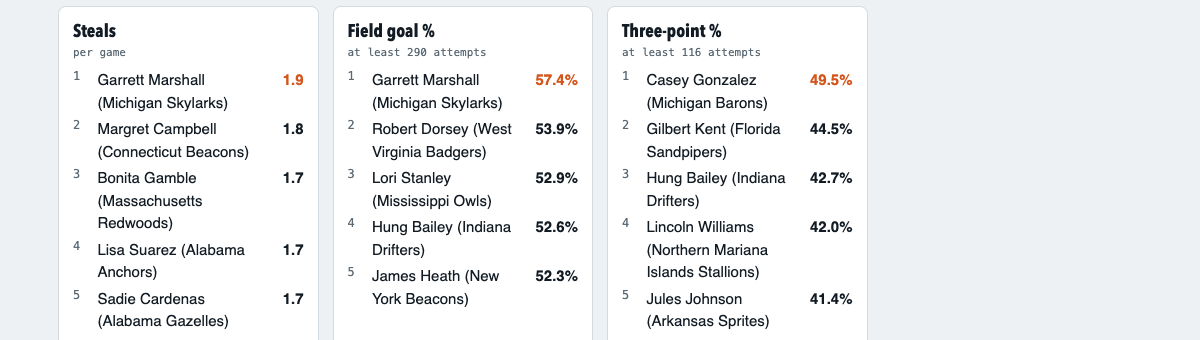
The replay says what just happened
The same records now speak in the replay. When a possession ends in a steal, a strip, a charge taken or a made shot, a short line appears under the score for three seconds of game time: "Steal by" and the defender's name, or the shooter's name with how many points and from how far, such as "makes a 3 from 7.7 m". A miss and the plays in between say nothing, so the line only appears when something worth naming has happened.
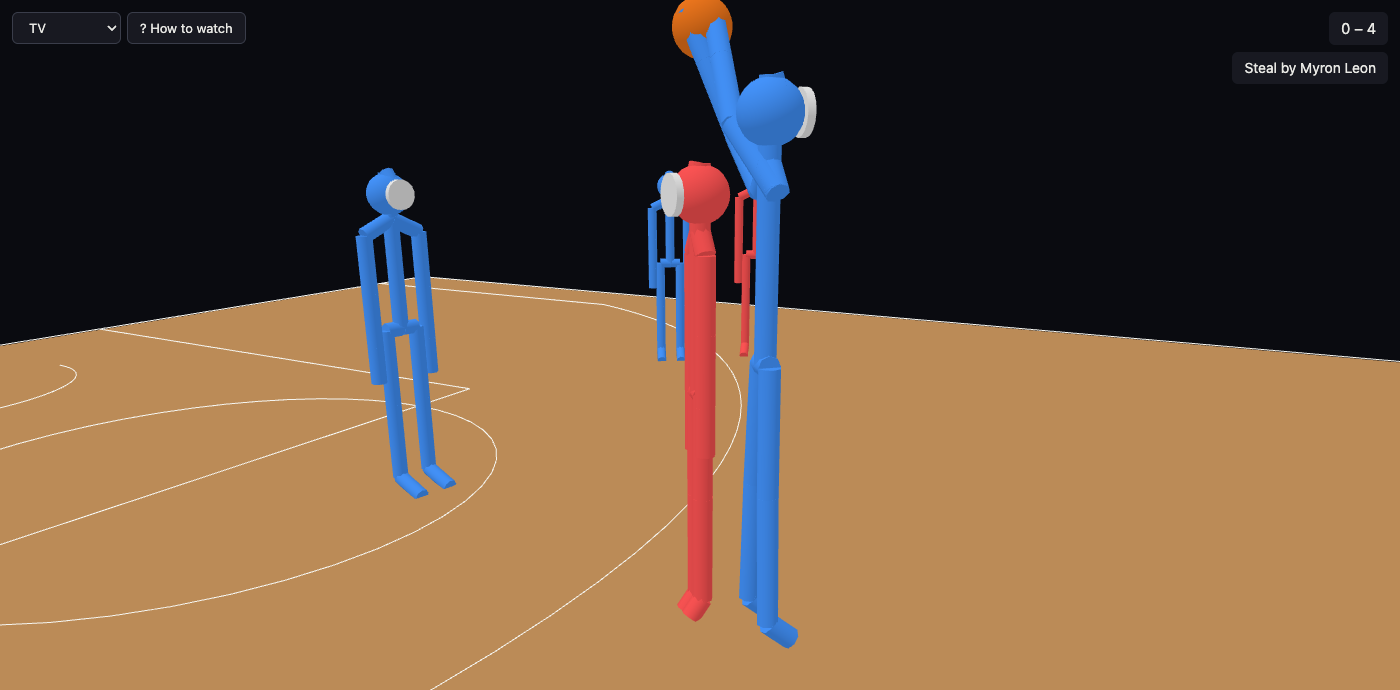
Like the box score, the line reads only what the game recorded: who took the ball, who made the shot and from where. It never guesses from the picture, so the words and the play always agree.