An arena around the basketball court, and a replay that rests when you pause it
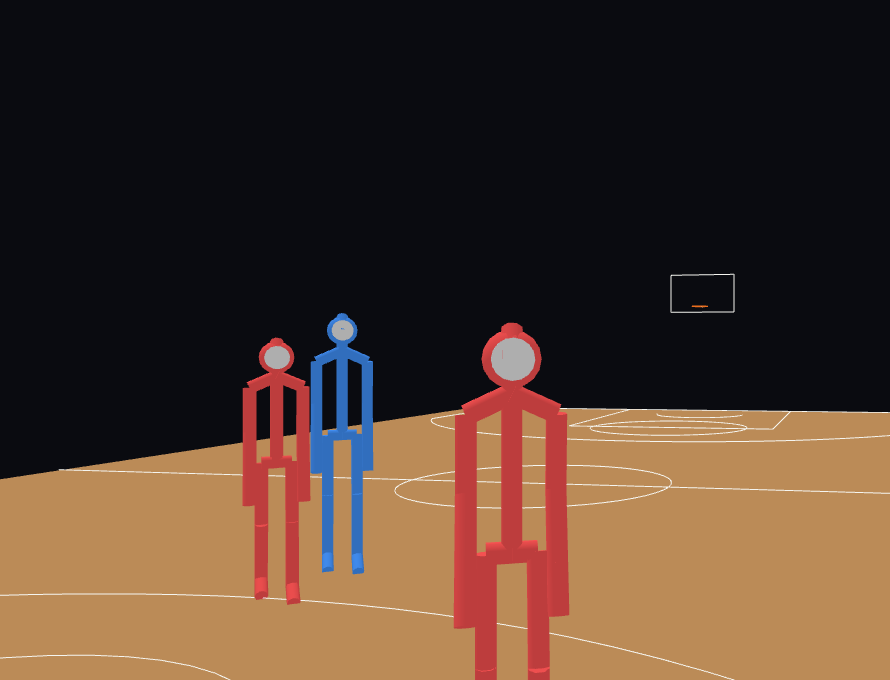
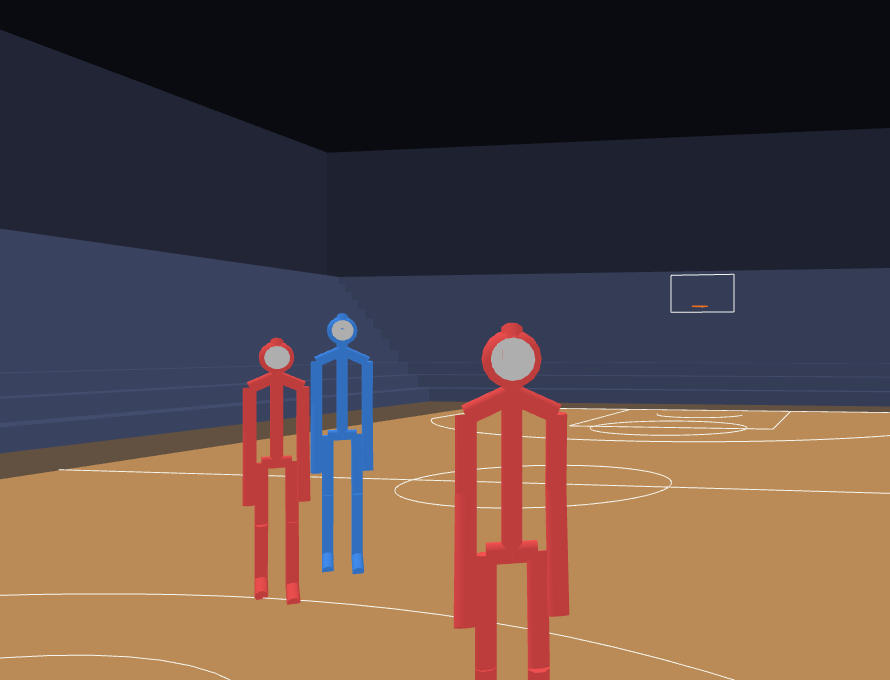
The replay can put you behind a player's eyes. Until now, when that player looked past the baseline, the world simply ended: the court's lines, and then black. The court now sits inside an arena: a run-off floor around the lines, twelve rows of stands and a wall behind them. They are plain shapes, sized from the rulebook's own court, so what a player looks out at has depth without pulling the eye from the game.
A paused replay that stops working
The replay used to draw every frame the screen could show, even while paused with nothing moving. On a phone-sized window, a paused replay drew between 133 and 503 frames every nine seconds, depending on the screen's sharpness. It now draws only when something changes (the clock, the game's data arriving, the camera, the window's size or sharpness, or whose eyes are hidden in a player's view), so the same nine seconds paused draw two frames. Playing is unchanged: every frame of a moving game is still drawn.
The sharpness is capped too. A phone with a very dense screen used to be drawn at three times the pixels in each direction, nine times the work, for detail too fine to see at that size. The replay now draws at no more than twice, which turns a canvas of 1500 by 2103 pixels into 1000 by 1402.