Every basketball game now opens with a tip-off you can watch
basketball.casa is a basketball league where every player is simulated as a body and a mind, and every game can be watched as a 3-D replay drawn from what those bodies did. Until this week a replay began with the first possession already set up. Now it begins the way a real game does: with a tip-off.
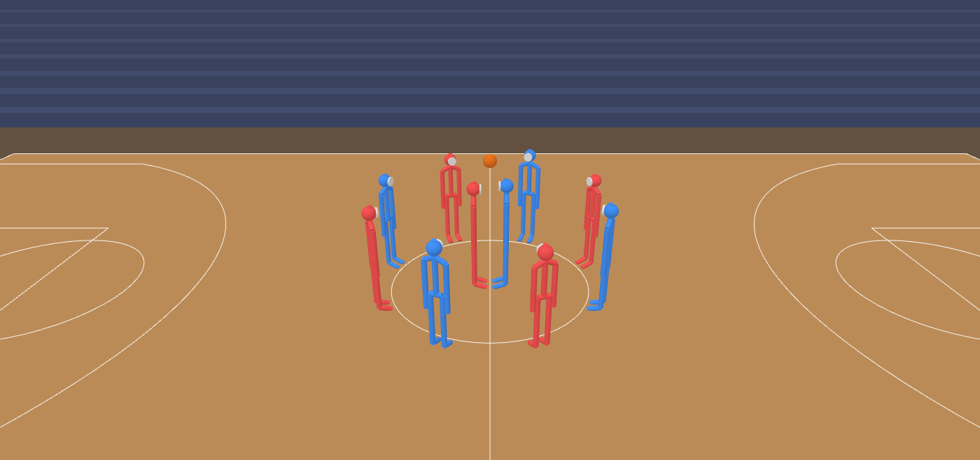
Ten players round the circle
A tip-off, or jump ball, is how a basketball game starts: the referee tosses the ball straight up at centre court, one player from each team jumps for it, and each tries to tap it to a teammate. The other eight wait outside the circle until the ball is touched.
The replay now shows that set-up as the rules lay it out. Each jumper stands in the half of the circle farthest from their own basket, and the other eight stand round the outside, the two teams taking turns, so no two teammates stand side by side.
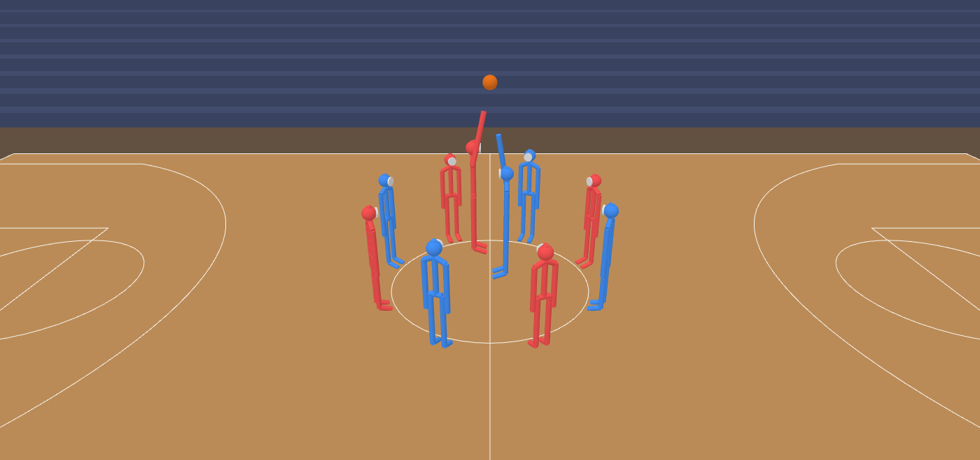
Two players leap
Each team sends up the player on the floor who can reach highest. Who wins the tap is not a coin flip. It comes from the two jumpers themselves: how high each one's hand gets, which is their standing reach plus their leap, and when each one leaves the floor. A player who reacts more quickly times the falling ball better, and a tired player reaches lower. The rules say a jumper may only touch the ball once it has started to fall, so a hand that gets there too early does not count, and a toss nobody touches is tossed again.
In the replay you see both players leave the floor and raise an arm to the ball, each at the moment they actually jumped.
The tap goes somewhere
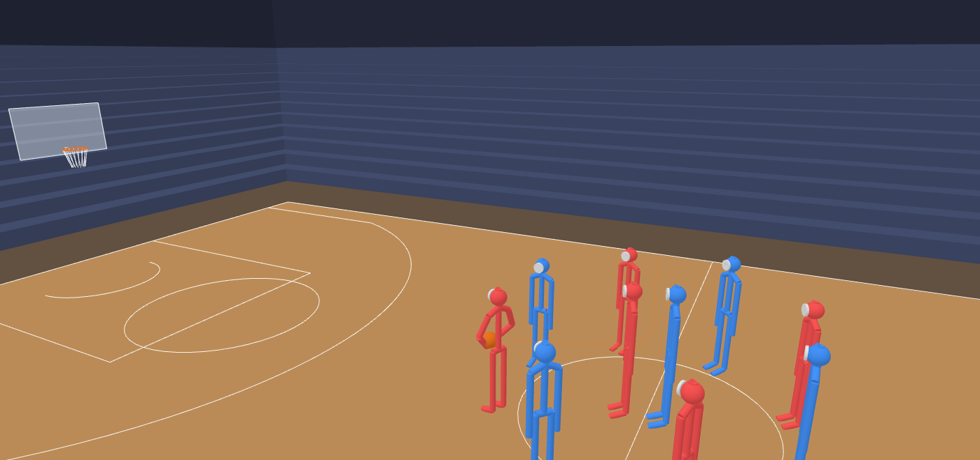
The winner does not tap the ball anywhere at random. Each teammate has some time before an opponent could get there, and the tap goes most often to the one with the most, though never with certainty: how settled the jumper is decides how closely they follow the open man. The replay draws the ball's flight from the tap to that teammate's hands. That player then brings the ball to their own spot, as after a throw-in, while the others run to theirs, and the first possession is on.
Starting apart
Starting every game from the circle also gave the opening play a new test: ten bodies that begin close together have to get to their first spots without passing through one another. When it was first built, 11 of 120 opening plays measured had two players closer than a chest's depth, mostly two defenders crossing on the first drive. A defender who waits a beat before stepping in to help now steers round their teammates' runs like every other defender does, and that count fell to 5 of 120.
Open any replay and press play from the very start, before the clock reaches zero, to see the tip.